
Is the Mediterranean Diet Expensive? A Realistic Cost Guide

Table of Contents
Is the Mediterranean Diet Expensive? The Real Answer
Mediterranean Diet on a Budget: Core Principles
Cheap Mediterranean Diet Foods That Deliver Nutrition
Plant-Based Proteins: Beans, Lentils, and Chickpeas
Seasonal Produce and Frozen Vegetables
Whole Grains and Pantry Staples
Mediterranean Diet Cost Per Week: What to Expect
The assumptions behind these numbers
Weekly grocery budget by household size
Where the money actually goes
How it compares with a typical American diet
Affordable Mediterranean Diet Meal Plan and Shopping Strategy
The seven-day plan
Priced shopping list for the week (one adult)
Batch-cooking rhythm that makes it work
Smart shopping and reducing food waste
Investing in Quality Where It Matters: Olive Oil and Fresh Fish
Frequently Asked Questions
Last Updated: October 17, 2026
Is the Mediterranean Diet Expensive? The Real Answer
Many people assume the Mediterranean diet expensive, but that reputation doesn't tell the whole story. Fresh fish, quality olive oil, and organic produce add up fast at the grocery store. But here's the truth: it doesn't have to be expensive if you know where to cut costs without sacrificing nutrition.
You can eat Mediterranean for less than most processed food diets if you focus on budget staples like beans, seasonal vegetables, and pantry basics.
The key question isn't whether the Mediterranean diet is expensive to follow. It's whether you're shopping smart. This guide breaks down exactly how to do it, with real strategies that work for any budget.
Mediterranean Diet on a Budget: Core Principles
Following the Mediterranean diet on a budget means prioritizing plant-based foods over animal proteins. Beans, lentils, and chickpeas cost a fraction of fresh fish or meat. They deliver the same protein and fiber that make this eating pattern so healthy.
Mediterranean Minutes
The second principle is buying seasonal produce. Out-of-season tomatoes cost three times more than tomatoes in summer. Seasonal shopping cuts your produce bill dramatically.
Third, buy frozen and canned vegetables. They're just as nutritious as fresh. A frozen bag of broccoli costs less and lasts longer than fresh. Canned tomatoes, beans, and fish are pantry staples that keep for months.
Finally, cook at home. Restaurant Mediterranean meals cost 5-10 times more than making them yourself. Batch cooking on Sunday means you eat well all week without daily cooking.
Pro Tip Buy dried beans in bulk from the bins at your grocery store. They cost 60% less than canned and cook in under an hour with a pressure cooker.
Cheap Mediterranean Diet Foods That Deliver Nutrition
The most affordable Mediterranean diet foods are the ones you should eat most anyway. Beans, lentils, whole grains, and seasonal vegetables form the backbone of this eating pattern.
Plant-Based Proteins: Beans, Lentils, and Chickpeas
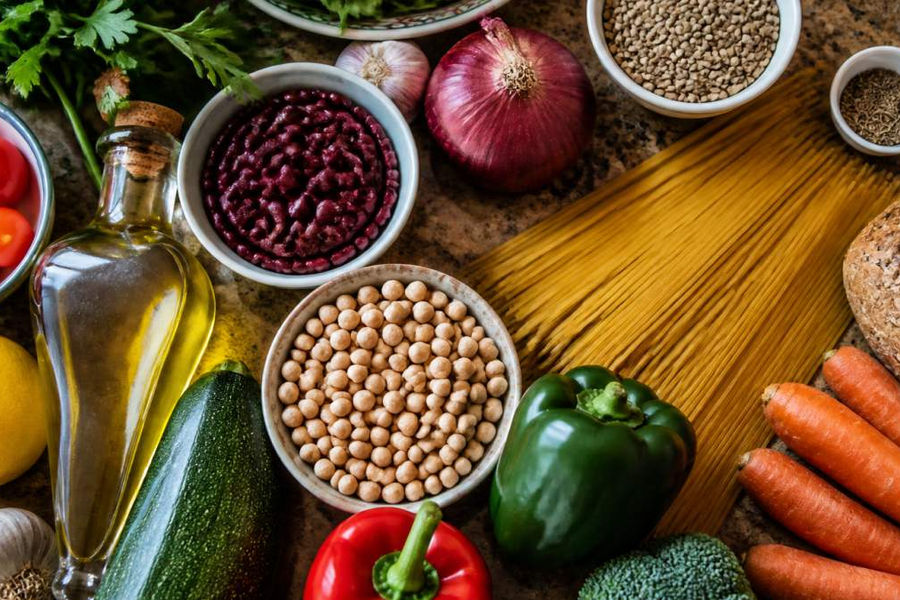
Dried beans cost under $2 per pound and provide as much protein as chicken at a fraction of the price. One pound of dried beans makes six servings, so your cost per serving drops to about 30 cents. Lentils cook faster than beans, no soaking required, and deliver similar nutrition.
Chickpeas work in salads, soups, and roasted as snacks. Buy them dried or canned. Canned chickpeas cost more per pound but save time if you don't want to cook from scratch.
A practical approach: buy five different types of beans and rotate them through your meals. Black beans, kidney beans, white beans, pinto beans, and lentils give variety without buying expensive proteins.
Seasonal Produce and Frozen Vegetables
Seasonal produce costs 50% less than out-of-season equivalents. In summer, tomatoes, zucchini, and peppers are cheap. In winter, root vegetables like carrots, beets, and squash drop in price.
Frozen vegetables are picked at peak ripeness and frozen immediately. They retain nutrients better than fresh produce shipped across the country. A frozen bag of mixed vegetables costs less than buying individual fresh ones.
Canned tomatoes are a Mediterranean diet staple. Buy them plain, no added sugar or sauce. Use them as a base for soups, stews, and pasta dishes. One can costs under a dollar.
Whole Grains and Pantry Staples
Whole grains like brown rice, oats, and whole wheat pasta are cheap and filling. Buy them in bulk. A pound of brown rice costs about two dollars and makes eight servings.
Whole grain bread costs more per loaf than white bread, but you eat less because it's more filling. One loaf lasts longer. Oats for breakfast cost pennies per serving.
Stock your pantry with olive oil, garlic, onions, and herbs. These basics flavor every meal without adding cost. Buy olive oil in bulk when it's on sale.
Mediterranean Diet Cost Per Week: What to Expect
Most budget claims about the Mediterranean diet are vague. This section gives you transparent numbers with the assumptions spelled out, so you can map them to your own household.
The assumptions behind these numbers
Every estimate below assumes:
All meals and snacks are eaten at home (no restaurant or takeout spending).
Beans and lentils supply most protein, with fish once or twice a week.
Produce is a mix of seasonal fresh and frozen.
Olive oil is bought in a large container and used at a normal cooking rate (about 2-3 tablespoons per person per day).
Prices reflect a mid-priced supermarket in an average-cost metro area. High-cost coastal cities and rural areas with limited competition can run 15-30% higher or lower.
Weekly grocery budget by household size
Household | Weekly low | Weekly typical | Weekly high |
1 adult | $45 | $60 | $85 |
2 adults | $80 | $110 | $150 |
Family of 4 (2 adults, 2 kids) | $130 | $175 | $230 |
These ranges cover three meals a day plus snacks. The low end reflects store brands, dried beans, frozen vegetables, and sale shopping. The high end reflects more fresh fish, premium olive oil, and out-of-season produce.
Where the money actually goes
For a typical one-adult week at $60, a realistic split looks like this:
Produce (fresh and frozen): $18-$22
Beans, lentils, and whole grains: $8-$10
Dairy (yogurt, a little cheese): $6-$8
Eggs and poultry: $8-$10
Fish (canned and one fresh portion): $8-$10
Olive oil, nuts, and pantry flavorings (averaged): $6-$8
That breakdown matters because it shows the diet is not expensive by default. The cost swings come from fish, out-of-season produce, and premium oil, not from the beans and grains that form the base.
How it compares with a typical American diet
A like-for-like comparison is the fair test. When you hold meals-at-home constant, a bean-and-vegetable Mediterranean week typically costs the same or less than a week built around packaged convenience foods, frozen dinners, and meat at every dinner. The Mediterranean plan usually wins on cost per serving for protein (beans and lentils versus beef or chicken) and loses only when you load up on fresh fish and specialty items.
The honest summary: the eating pattern itself is not expensive. Specific product choices within it can be.
Watch Out Don't compare a home-cooked Mediterranean week to a week of restaurant meals, that's not like-for-like. Compare it to a week of home-cooked meals in any pattern, and the gap narrows sharply.
Affordable Mediterranean Diet Meal Plan and Shopping Strategy
A week of Mediterranean meals doesn't require fancy ingredients, it requires planning and a priced list. Below is a complete seven-day plan with quantities, a shopping list organized by store section, and per-serving cost estimates based on typical mid-priced supermarket prices.
The seven-day plan
Monday: Lentil soup with carrots, onion, and celery; whole grain bread. (Makes 4 servings, eat 2, save 2.)
Tuesday: Leftover lentil soup; side salad with cucumber and olive oil dressing.
Wednesday: Chickpea and tomato stew over brown rice. (Makes 4 servings, eat 2, save 2.)
Thursday: Leftover chickpea stew; roasted seasonal vegetables.
Friday: Whole wheat pasta with white beans, canned tomatoes, and frozen spinach. (Makes 4 servings, eat 2, save 2.)
Saturday: Leftover pasta; simple egg-and-vegetable frittata.
Sunday: Baked fish (whatever is on sale) with roasted potatoes and frozen green beans.
Breakfast every day: oatmeal with fruit (about $0.50-$0.75 per serving). Lunch: leftovers from the previous night's dinner. Snacks: fruit, a small handful of nuts, whole grain crackers.
Priced shopping list for the week (one adult)
Pantry staples
Dried lentils, 1 lb: about $1.80
Dried chickpeas, 1 lb (or 2 cans): about $1.80 dried / $2.00 canned
Brown rice, 1 lb: about $2.00
Whole wheat pasta, 1 lb: about $1.80
Canned tomatoes, 2 cans: about $1.80
Canned white beans, 1 can: about $1.00
Rolled oats, 1 lb: about $2.50
Olive oil (averaged portion of a large container): about $3.00
Onions, garlic, dried herbs: about $2.50
Produce
Carrots, celery, seasonal vegetables: about $6.00
Cucumber and salad greens (or frozen greens): about $3.50
Potatoes: about $2.00
Frozen spinach and frozen green beans: about $3.50
Fruit for the week: about $5.00
Proteins and dairy
Eggs, 1 dozen: about $3.50
Plain yogurt, 32 oz: about $4.00
Fish on sale, about 1 lb: about $7.00
Small bag of nuts: about $4.00
Estimated weekly total: about $55-$60, which lands at roughly $2.60-$2.90 per meal across 21 meals plus snacks. That is the concrete answer to whether the diet is expensive: at this plan's math, it is not.
Batch-cooking rhythm that makes it work
Cook the lentils and chickpeas once at the start of the week (a pressure cooker cuts this to under an hour). Cook a large pot of brown rice and refrigerate it. Wash and chop vegetables once so weeknight cooking is assembly, not prep. Double every dinner so lunch is already made.
Smart shopping and reducing food waste
Shop with a list and don't browse, impulse buys are what spoil. Buy only what the plan calls for. Check your pantry before you leave so you don't double-buy beans or grains. Buy store brands; they are the same product at a lower price. Stock up on olive oil, canned tomatoes, and dried beans when they go on sale, they keep for months.
Shopping Strategy | Typical Savings |
Dried beans instead of canned | About 60% per pound |
Frozen instead of fresh vegetables | About 40-50% |
Store brands instead of name brands | About 25-35% |
Sale shopping on pantry staples | About 20-30% |
Batch cooking and planned leftovers | Cuts food waste and takeout spending |
Pro Tip If you have limited kitchen equipment, a single pot, a sheet pan, and a pressure cooker cover every meal in this plan. No specialty tools required.
Investing in Quality Where It Matters: Olive Oil and Fresh Fish
You don't need to buy premium everything. But olive oil deserves investment. It's the foundation of Mediterranean cooking, and quality matters for flavor and health.
Cheap olive oil tastes bland. Premium olive oil tastes alive, peppery, grassy, bright. You use less because the flavor is stronger. A good bottle lasts longer and costs less per use.
Fresh fish is expensive. Buy it once or twice a month as a treat, not weekly.
At Nona's EVOO, we believe olive oil is worth the investment. Fresh-pressed Greek olive oil delivers high polyphenol content and superior flavor.
For fresh fish, buy what's on sale. Frozen fish thaws in the refrigerator and cooks the same as fresh.
Best For Home cooks who want to follow the Mediterranean diet without spending money on fancy ingredients or specialty stores. This approach works for families, singles, and anyone eating on a realistic budget.
The Mediterranean diet doesn't have to be expensive to follow. It's affordable when you focus on beans, seasonal vegetables, whole grains, and pantry staples.
Join the Nona's EVOO community to learn how fresh, quality olive oil elevates affordable Mediterranean meals.
Frequently Asked Questions
Can you follow the Mediterranean diet on a budget?
Yes. The Mediterranean diet is affordable when you prioritize pantry staples like beans, lentils, chickpeas, whole grains, and seasonal produce. Plant-based proteins cost significantly less than fish or poultry. Frozen and canned vegetables offer the same nutritional benefits as fresh at lower prices. Meal planning and batch cooking reduce waste and stretch your grocery budget. The key is spending strategically on quality olive oil while keeping other costs low.
What are the cheapest foods to eat on a Mediterranean diet?
Beans, lentils, and chickpeas are among the lowest-cost protein sources and are staples of the Mediterranean pattern. Whole grains like brown rice, pasta, and oats provide fiber and sustenance affordably. Seasonal produce, carrots, cabbage, spinach, tomatoes, costs less than out-of-season items. Canned fish like sardines and mackerel offer omega-3 fatty acids at reasonable prices. Nuts and seeds in bulk, dried fruits, and pantry staples like olive oil round out an inexpensive yet nutrient-dense approach.
How much does it cost to follow the Mediterranean diet per week?
Weekly food spending depends on household size, location, and whether you buy organic or conventional produce. Choosing frozen vegetables, buying beans in bulk, and meal planning help keep costs at the lower end. Premium ingredients like high-polyphenol olive oil or fresh fish increase spending but remain optional, the core pattern is achievable on modest budgets.
Is the Mediterranean diet more expensive than a typical diet?
Not necessarily. The Mediterranean diet emphasizes affordable staples: legumes, whole grains, seasonal vegetables, and home cooking. A typical diet heavy in processed foods, convenience items, and takeout often costs more. The Mediterranean approach saves money through batch cooking, minimal food waste, and reliance on pantry basics. Where costs may rise is if you choose premium olive oil, organic produce, or fresh fish regularly, but these are optional enhancements, not requirements.
JOIN THE CLUB


Comments