
Refined vs. Extra Virgin Olive Oil: A 2026 Guide

Last Updated: October 22, 2026
Quick Summary
Refined vs extra virgin olive oil differs fundamentally in processing: extra virgin is cold-pressed mechanically without heat or chemicals, preserving natural compounds and flavor, while refined olive oil undergoes industrial processing including heating, bleaching, and deodorizing that strips away color, aroma, and polyphenols. Extra virgin has a lower smoke point around 375-405°F and is best for finishing dishes, while refined olive oil reaches 465°F and suits high-heat cooking.
Extra virgin olive oil must have free acidity below 0.8% and contains significantly higher levels of polyphenols, antioxidant compounds that refined oil lacks.
Refined olive oil is made from lower-quality olives that don't meet extra virgin standards and is processed to create a neutral-tasting, stable product.
Extra virgin olive oil stays fresh for 18-24 months unopened when stored in cool, dark conditions, but loses quality quickly when exposed to light and heat.
Authentic extra virgin olive oil should display a harvest date, single-origin labeling, and have fruity, grassy, or peppery flavor notes.
For most home cooking below 400°F, extra virgin olive oil performs better than refined because it retains nutritional compounds and adds genuine flavor to dishes.
Table of Contents
What Extra Virgin Olive Oil Is
What Refined Olive Oil Is
Pure Olive Oil vs. Extra Virgin Olive Oil: Processing and Composition
Flavor, Color, and Aroma: Sensory Differences
Olive Oil Smoke Point and Cooking Applications
Antioxidants, Acidity, and Nutritional Content
How to Identify Authentic Extra Virgin Olive Oil and Storage After Opening
Which Oil Should You Choose?
Frequently Asked Questions
What Extra Virgin Olive Oil Is
When comparing refined vs extra virgin olive oil, the key difference is that extra virgin is the least processed form, made by mechanically pressing olives without heat or chemicals. This cold-pressed method preserves the oil's natural compounds, flavor, and nutritional profile. It represents the highest quality grade available and must meet strict standards for acidity and sensory characteristics.
The term "extra virgin" signals minimal intervention. Once olives are harvested, they're crushed and the liquid is separated from the solids, that's it. No refining, no bleaching, no deodorizing. What you get is the pure juice of the fruit, captured at its peak.
At Nona's EVOO, we understand that freshness matters enormously. Extra virgin olive oil oxidizes over time, especially when exposed to light and heat. That's why we deliver fresh-pressed Greek extra virgin olive oil directly to your door, ensuring you experience the vibrant flavor and authentic Mediterranean character that makes this oil special.
Pro Tip Extra virgin olive oil begins to lose quality the moment it's pressed. Storage temperature, light exposure, and time all degrade the oil's polyphenols and flavor compounds. Buying from a source that prioritizes rapid delivery, rather than sitting on warehouse shelves, is the single biggest factor in what you taste.
What Refined Olive Oil Is
Refined olive oil is made from olives that don't meet the standards for extra virgin classification. These olives may be overripe, bruised, or simply lower quality. The oil undergoes industrial processing: heating, bleaching with clay, filtering, and deodorizing with steam.
The result is a neutral-tasting, light-colored oil with a higher smoke point. Refined olive oil is sometimes labeled as "light," "pure," or simply "olive oil." It's what you'll find in most grocery stores at budget prices. The processing creates a stable product that won't go rancid quickly and can tolerate higher cooking temperatures.
Here's what matters: refined olive oil is not a lower grade of the same thing. It's a fundamentally different product made from different raw material through completely different methods. When a bottle says "pure olive oil" or "light olive oil," you're looking at refined oil, not a diluted version of extra virgin.
Watch Out "Light olive oil" refers to color and flavor, not calories or fat content. A refined olive oil labeled "light" has the same caloric density as extra virgin, the "light" describes the taste profile, not the nutritional density. This labeling convention confuses many shoppers.
Pure Olive Oil vs. Extra Virgin Olive Oil: Processing and Composition
The processing methods define everything about these two oils. Extra virgin olive oil undergoes mechanical extraction only: pressing and separation. Refined olive oil undergoes chemical and thermal processing that fundamentally alters its composition.
When olives are refined, heat breaks down the cell walls and releases more oil from lower-quality fruit. Bleaching removes chlorophyll and other pigments. Deodorizing removes volatile compounds that give olive oil its characteristic aroma.
This processing difference explains why refined olive oil can tolerate higher cooking temperatures. The polyphenols and other heat-sensitive compounds that break down at high temperatures are already gone. Extra virgin olive oil retains these compounds, which means it degrades faster when heated.
Pure olive oil, also called "light" or "classic" olive oil, sits between refined and extra virgin in terms of processing intensity. It may contain a small percentage of extra virgin oil blended with refined oil, or it may be refined oil with minimal extra virgin added for flavor.
Flavor, Color, and Aroma: Sensory Differences
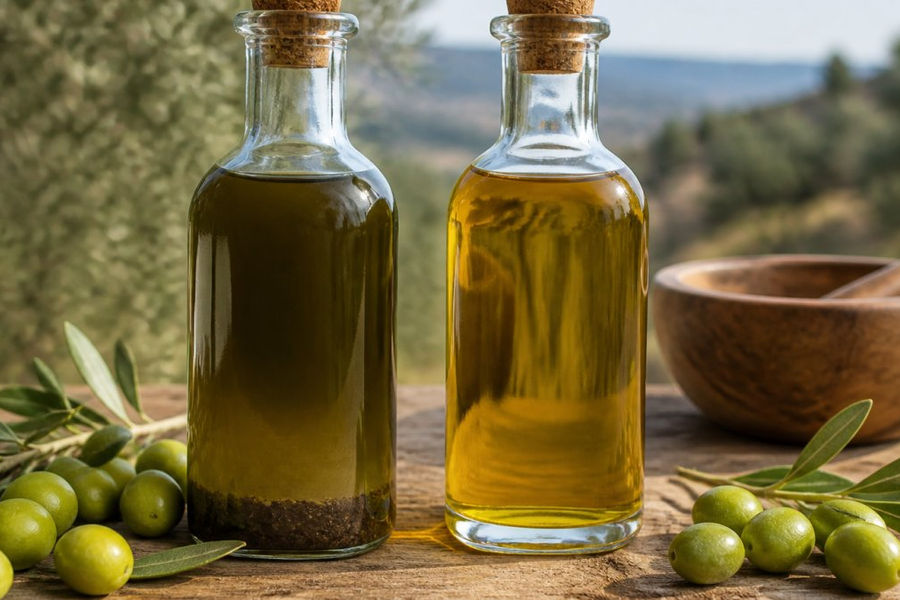
Extra virgin olive oil tastes like olives. You'll notice fruity, grassy, or peppery notes depending on the harvest time and olive variety. The color ranges from deep green to golden, often with visible sediment.
Refined olive oil has virtually no taste, no aroma, and a pale golden or clear appearance. It's neutral by design.
This sensory difference matters for how you use each oil. Extra virgin olive oil shines as a finishing oil, drizzled on soup, tossed with pasta, used as a dip for bread. The flavor is the point. Refined olive oil disappears into dishes.
When you taste genuine extra virgin olive oil for the first time, you'll notice a slight peppery sensation in the back of your throat. That's not a defect. That's polyphenols, the antioxidant compounds that make extra virgin oil nutritionally superior. It's a sign of quality and freshness.
Olive Oil Smoke Point and Cooking Applications
Smoke point is the temperature at which oil begins to break down and smoke. Refined olive oil has a smoke point around 465°F, making it suitable for sautéing, roasting, and light frying. Extra virgin olive oil has a lower smoke point, typically around 375-405°F, depending on the specific oil and harvest.
This difference shapes how you should use each oil. Refined olive oil works for high-heat cooking: pan-frying vegetables, roasting potatoes, making vinaigrettes that sit at room temperature. Extra virgin olive oil is best for low-to-medium heat applications: sautéing delicate greens, finishing soups, dressing salads, dipping bread.
Here's where most guides get it wrong: extra virgin olive oil can handle moderate cooking temperatures without breaking down. It's not fragile. You can sauté garlic in extra virgin olive oil without destroying it.
The practical rule is simpler than the science: use refined olive oil when you're cooking at high temperature and flavor doesn't matter. Use extra virgin when you want the oil's flavor to contribute to the dish or when the cooking temperature is moderate.
Key Takeaway Smoke point is a threshold, not a cliff. Extra virgin olive oil doesn't spontaneously combust at 375°F. It begins to degrade gradually above that temperature. For everyday home cooking below 400°F, extra virgin olive oil is the better choice because it retains its nutritional compounds and flavor.
Antioxidants, Acidity, and Nutritional Content
Extra virgin olive oil contains significantly higher levels of polyphenols, antioxidant compounds that give the oil its nutritional edge. These polyphenols are what create that peppery sensation and contribute to the oil's anti-inflammatory properties. Refined olive oil has almost none. The processing removes them.
Acidity is a quality marker for extra virgin olive oil. True extra virgin must have free acidity below 0.8%. This measurement indicates how much the olives were damaged or oxidized before pressing. Lower acidity means fresher fruit and better handling.
Both oils are high in monounsaturated fats, which is why olive oil is a cornerstone of the Mediterranean diet. Both support heart health when used as part of a balanced diet. The nutritional difference lies in the polyphenols.
The polyphenol content varies dramatically based on harvest time and freshness. This is why fresh-pressed oil delivered quickly, like the Greek extra virgin olive oil from Nona's EVOO, preserves more of these beneficial compounds than oil that's been sitting in a warehouse or on a grocery store shelf.
How to Identify Authentic Extra Virgin Olive Oil and Storage After Opening
Authentic extra virgin olive oil has a few reliable markers. Look for a harvest date or "best by" date on the label. Reputable producers list when the oil was pressed.
Check the origin. True extra virgin olive oil comes from a specific region: Greek, Italian, Spanish, Portuguese.
Taste is the final test. Authentic extra virgin olive oil should have flavor, fruity, grassy, peppery, or herbaceous notes depending on the variety. If the oil tastes bland or neutral, it's either refined or very old.
Storage matters enormously once you open the bottle. Extra virgin olive oil oxidizes when exposed to light, heat, and air.
Refined olive oil is more stable. It can tolerate warmer storage and lasts longer once opened because it has fewer heat-sensitive compounds to degrade. This shelf stability is one reason it dominates grocery store shelves.
Pro Tip The difference between a bottle of extra virgin olive oil that tastes vibrant and one that tastes flat often comes down to storage. Even premium oil degrades in warm kitchens or under bright lights. If your oil tastes dull, storage conditions are likely the culprit, not the oil itself.
Which Oil Should You Choose?
When deciding between refined vs extra virgin olive oil, the answer depends on how you cook and what you value. For most home cooks, extra virgin olive oil is the better choice for everyday use.
Use refined olive oil when you're cooking at high temperatures, deep frying, roasting at 425°F or higher, or making large batches where cost matters more than flavor.
Criteria | Extra Virgin Olive Oil | Refined Olive Oil |
Processing | Cold-pressed only | Heat, bleaching, deodorizing |
Smoke Point | 375-405°F | ~465°F |
Flavor | Fruity, grassy, peppery | Neutral, mild |
Color | Green to golden | Pale golden, clear |
Polyphenols | High | Minimal |
Free Acidity | Below 0.8% | No limit |
Best Use | Finishing, low-heat cooking | High-heat cooking |
Shelf Life (unopened) | 18-24 months | 2+ years |
Price Point | Premium | Budget-friendly |
The real differentiator is freshness. An old bottle of extra virgin olive oil loses its advantage. A fresh bottle of refined olive oil is stable and reliable.
At Nona's EVOO, we've built our business around this principle: freshness beats everything. We deliver Greek extra virgin olive oil directly to your door within weeks of harvest, not months or years.
The choice between refined and extra virgin olive oil comes down to your priorities. If you value flavor, nutrition, and are cooking at moderate temperatures, extra virgin is the clear winner.
Frequently Asked Questions
Is extra virgin olive oil better for you than refined olive oil?
Extra virgin olive oil contains significantly more antioxidants and polyphenols than refined olive oil because it undergoes minimal processing. These compounds support heart health and provide anti-inflammatory benefits. Refined olive oil has had most of these nutrients removed during the refining process. For health-conscious consumers prioritizing antioxidant intake, extra virgin olive oil offers measurably higher nutritional value, making it the superior choice if budget allows.
What is the difference between pure olive oil and extra virgin olive oil?
Pure olive oil (also called light or regular olive oil) is refined through chemical and heat processing to remove impurities, flavor, and color. Extra virgin olive oil is cold-pressed with minimal processing, retaining its natural flavor, aroma, and nutrients. Pure olive oil has a neutral taste and higher smoke point, making it better for cooking at high temperatures. Extra virgin olive oil is best used for finishing dishes, drizzling, and dressings where its complex flavor shines.
Can you cook with extra virgin olive oil, and what is its smoke point?
Extra virgin olive oil has a smoke point around 375-405°F, making it suitable for medium-heat cooking like sautéing vegetables and light pan-frying. Refined olive oil reaches 450-465°F, making it better for higher-temperature cooking and deep frying. While you can cook with extra virgin olive oil, using it for high-heat applications breaks down its beneficial compounds and wastes its premium flavor. Reserve extra virgin for low to medium-heat cooking and finishing dishes.
How do I know if extra virgin olive oil is authentic, and how should I store it after opening?
Authentic extra virgin olive oil carries certifications from recognized bodies and has a harvest date on the label, look for oils pressed within the past year. Reputable producers provide transparency about origin and testing. Store opened bottles in a cool, dark place away from heat and light; refrigeration extends freshness. Consume within 3-6 months of opening for optimal flavor and polyphenol content. Fresh-pressed oils delivered directly maintain quality better than oils sitting on grocery shelves.
JOIN THE CLUB
Add nonasevoo.com as a preferred source on Google →



Comments